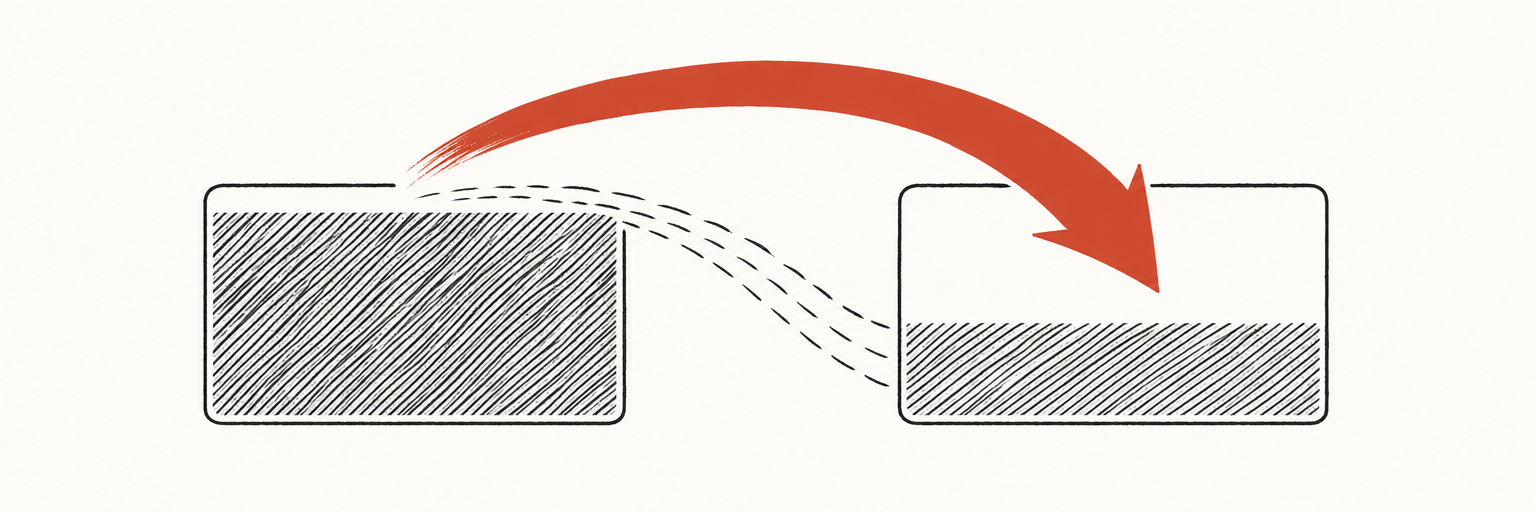
A balance transfer moves debt from one credit card to another — typically to a card offering a 0% introductory APR period. Done correctly, it reduces the interest you pay while you pay down the principal. The credit score impact is manageable if you understand what’s happening.
What happens to your credit score
Short-term (within 1–2 months):
- A hard inquiry from the application drops your score by approximately 5–10 points temporarily
- A new account lowers the average age of accounts (a smaller factor, but real)
Medium and longer-term (if managed correctly):
- Paying down the transferred balance reduces overall credit utilization — one of the most influential factors in your score
- On-time payments build positive payment history
The short-term dip is minor and temporary. The bigger opportunity is the improvement from paying down debt faster during the 0% period.
The risk that actually matters
The common mistake that turns a balance transfer into a credit problem: running up the original card’s balance after the transfer.
After the transfer, your old card has a near-zero balance and a clean credit limit. If you treat that as new available credit and charge it up again, you’ve doubled your debt rather than reduced it. This is both a debt problem and a credit score problem — your total utilization rises sharply.
A balance transfer without changing spending behavior often leaves people worse off within a year.
Utilization mechanics
Credit utilization is the ratio of your total credit card balance to your total credit limit. Lower is better. A balance transfer affects utilization in two ways:
- The new card carries the transferred balance — raising utilization on that card
- The old card now has a low balance — lowering utilization there
If you don’t run up the old card, your total utilization across all cards stays roughly the same or improves as you pay down the transferred balance. If the new card has a lower credit limit than expected, it could increase per-card utilization even if total utilization is unchanged.
Steps that minimize the credit impact
-
Check your existing cards first. Some issuers allow balance transfers between their own cards — no new account, no hard inquiry, just a phone call.
-
Apply for a single card. Multiple applications in a short period stack hard inquiries. Apply for the best option, not several at once.
-
Don’t close the old card. Closing it removes the credit limit from your available credit, which raises your utilization ratio. Leave the old card open with a zero or very low balance.
-
Pay off the full balance before the 0% period ends. Balance transfer fees (typically 3–5% of the transferred amount) plus the regular APR that kicks in after the promotional period can eliminate your savings if you don’t pay off the balance in time.
-
Stop using both cards for new purchases. This keeps the debt picture clean during the payoff period.
The balance transfer fee
Most cards charge a fee of 3–5% of the transferred balance upfront. On $5,000 transferred, that’s $150–$250. This is still typically much less than the interest you’d pay over the same period on a high-rate card, but the fee reduces the net savings.
Check whether the fee has a minimum dollar amount — some cards charge at least $5 or $10 regardless of balance transferred.
Who benefits from balance transfers
Balance transfers work best when:
- You have high-interest credit card debt (15%+ APR)
- You have enough income to pay off the balance during the 0% period
- You’re committed to not adding new charges to either card
- Your credit score is good enough to qualify for a card with a meaningful 0% period and credit limit
A 680+ credit score typically opens access to the best balance transfer offers. Below that, the available terms may not provide enough savings to justify the transfer.
Who they don’t help
- Someone who will continue charging on the freed-up old card
- Someone whose income won’t cover the monthly payment needed to clear the balance before the promotional period ends
- Someone with very thin credit who needs the new account’s age to build history (the new account initially lowers average account age)