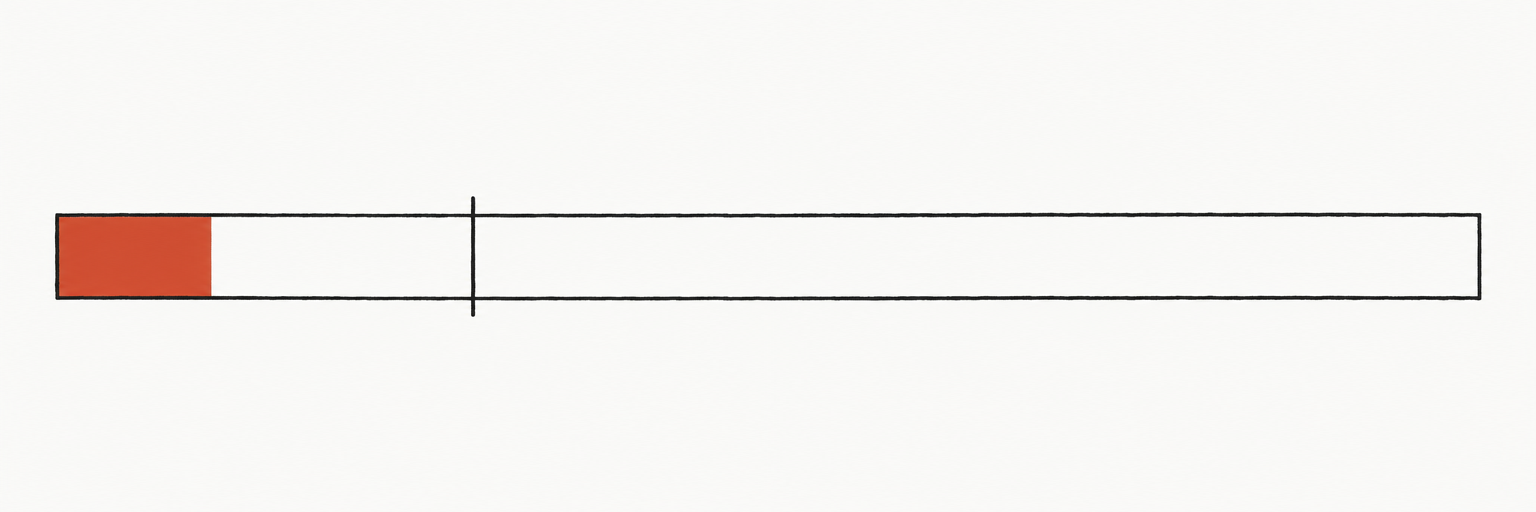
Credit utilization is the ratio of your current credit card balances to your total credit limits across all revolving accounts. If you have a $10,000 total credit limit and owe $3,000, your utilization is 30%.
It is the second most important factor in your FICO score, accounting for 30% of the total calculation. And unlike payment history — which requires months and years to build — utilization can change dramatically within a single billing cycle.
Why it matters so much
Utilization falls under the “Amounts Owed” category in FICO scoring. The FICO model treats high utilization as a signal of financial stress: someone using most of their available credit may be depending on it to cover expenses they can’t otherwise afford. Conversely, low utilization signals that a borrower has access to credit and isn’t overextending.
The response time is faster than any other FICO factor. Pay down a balance before your statement closes, and the lower balance gets reported to the bureaus — your score can improve within one billing cycle, typically 30 days.
The 30% rule is wrong — lower is always better
The commonly cited advice to “keep utilization below 30%” is a floor, not a target. The relationship between utilization and FICO score is continuous: lower is better at every step, with no single threshold where the improvement stops.
| Utilization range | Score impact |
|---|---|
| 1–9% | Best possible points for this factor |
| 10–29% | Good — minimal penalty |
| 30–49% | Moderate negative impact |
| 50–74% | Significant negative impact |
| 75–99% | Severe negative impact |
| 100% (maxed out) | Maximum negative impact |
People with FICO scores above 800 carry an average utilization of approximately 4%, according to myFICO. The 30% figure became a rule of thumb because it’s a reasonable cutoff for avoiding serious score damage, not because 29% is somehow meaningfully better than 31%.
If you’re trying to maximize your score — ahead of a mortgage application, for example — get utilization to single digits.
A concrete score impact example
Consider a borrower with three credit cards:
- Card A: $500 balance on a $2,000 limit = 25% utilization
- Card B: $1,800 balance on a $2,000 limit = 90% utilization (nearly maxed)
- Card C: $0 balance on a $5,000 limit = 0% utilization
Total utilization: $2,300 / $9,000 = 25.6% — looks reasonable.
But Card B is a problem. FICO evaluates utilization at both the overall level and the per-card level. Card B’s 90% utilization creates a significant per-card penalty even though the overall number looks acceptable. If the borrower paid Card B down to $200 (10% utilization), their overall utilization would drop to about 7.8% and the per-card issue disappears. Score impact: potentially 20–50 points depending on the rest of the credit profile.
Both overall and per-card utilization matter
FICO evaluates utilization at two levels simultaneously:
- Overall utilization: total balances across all cards divided by total limits across all cards
- Per-card utilization: each individual card’s balance relative to its own limit
This has a practical implication: you can’t fix per-card utilization by spreading charges across multiple cards. A single maxed-out card creates a per-card penalty regardless of what the aggregate number looks like. Keep each individual card well below its limit.
The 0% utilization trap
Aiming for exactly zero is counterproductive. If no balance is ever reported, you show no active use of revolving credit — and some FICO models give fewer points to accounts with no reported balance, compared to accounts showing low (1–9%) activity.
The right approach: charge something small each month, then pay the balance before the statement closes if you want to report a very low balance. The balance reported to the bureaus is your statement balance — what appears on your bill at the statement close date — not your balance at any other point in the month.
How to lower utilization quickly
Utilization responds faster than any other credit factor. These strategies work within one or two billing cycles:
Pay before the statement closing date: Your statement balance is what gets reported, not your real-time balance. If you carry a $900 balance on a $1,000 card but pay it down to $50 before the closing date, $50 is what the bureau sees.
Request a credit limit increase: Higher limit with the same balance means lower utilization. Example: $500 balance on a $1,000 limit = 50% utilization. The same $500 balance on a $2,000 limit = 25%. Ask your issuer whether this requires a hard or soft pull — many will tell you upfront.
Pay in multiple installments per month: If you pay before the statement closes, the balance reported is lower. Some consumers with high income and high spending pay their card balance twice a month to keep the reported balance near zero.
Open a new card: Adds to your total available credit. The same balances on a higher total limit means lower overall utilization. This is only worth doing if you genuinely need the card — the hard inquiry has a small short-term cost, and a new account temporarily lowers your average account age.
What doesn’t count toward utilization
Utilization only applies to revolving credit — credit cards and lines of credit. Installment loans (mortgages, student loans, auto loans, personal loans) are tracked separately and do not factor into the utilization ratio.
This means paying off a mortgage or auto loan has no direct effect on your credit utilization score. Those balances fall under a different part of the amounts-owed calculation.
Common mistakes
- Closing credit cards to simplify finances: Closing a card removes its limit from your total available credit. If you carry balances on other cards, your utilization jumps immediately. A closed $3,000-limit card with zero balance raises every other card’s effective utilization.
- Paying on the due date instead of the closing date: Many consumers are on-time payers who still carry high reported utilization because they pay after the statement closes rather than before.
- Thinking the minimum payment controls utilization: Paying the minimum keeps you current but doesn’t reduce your reported balance — you still owe nearly the full amount when the next statement closes.
- Ignoring per-card utilization: One maxed card causes a per-card penalty even if your overall utilization looks fine. Every card matters individually.
Next step
Log into each of your card accounts and find the statement closing date (different from the payment due date — usually 21–25 days before). Schedule a payment for a few days before the closing date to reduce the balance that gets reported. Even dropping one card from 80% to 20% utilization can produce a measurable score improvement at the next reporting cycle.