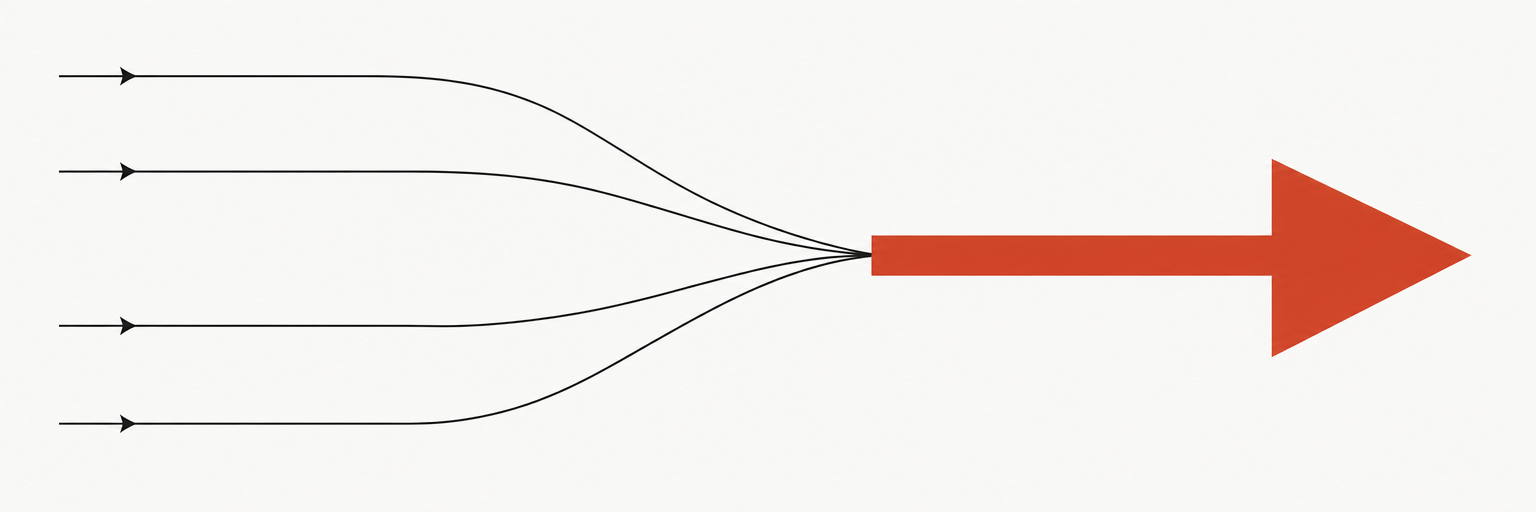
Debt consolidation means rolling multiple debts — typically credit cards, medical bills, or personal loans — into one new loan or payment arrangement. The goal is a single monthly payment, usually at a lower interest rate, that’s easier to manage and cheaper over time.
Whether it actually helps depends entirely on the terms you can qualify for and whether you change the spending behavior that created the debt.
The rate gap that makes consolidation worth it
The math only works if your new loan rate is meaningfully below your current average. As of April 2026, the average credit card APR across all accounts is 21.0%, according to the Federal Reserve G.19 consumer credit report. New card offers are averaging 22.12% APR.
Against that benchmark, personal consolidation loans look favorable: the average personal loan interest rate is 12.27% APR for a borrower with a 700 FICO score (Bankrate, April 2026). Credit unions offer the lowest average at 10.72%. Borrowers with excellent credit (720+) can find rates as low as 6–7%.
The spread — roughly 9 percentage points between a typical personal loan and a typical credit card — translates to hundreds or thousands of dollars in interest savings over a 3–5 year payoff period.
How debt consolidation works
You take out a new loan or use a balance transfer card and use those funds to pay off your existing debts. Now you owe one lender instead of several, on new terms.
| Method | How it works | Typical rate | Key risk |
|---|---|---|---|
| Personal consolidation loan | Unsecured loan from a bank, credit union, or online lender | 10–16% APR | Rate may not beat cards if credit is poor |
| Balance transfer card | Move balances to a 0% intro APR card | 0% intro, then 20%+ | Rate jumps after promo period (12–21 months) |
| Debt management plan (DMP) | Nonprofit counselor negotiates reduced rates; you make one payment | 6–9% (negotiated) | No new credit; 3–5 year program |
| Home equity loan / HELOC | Borrow against your home at a secured rate | 7–9% | You can lose your home if you don’t repay |
Over 40% of personal loan borrowers use their loan for debt consolidation, making it the most common reason people take out personal loans (LendingTree, 2026).
When consolidation helps
Consolidation makes sense when all four of these apply:
- The new interest rate is at least 3–5 percentage points lower than your current average rate
- You have a concrete plan to pay off the balance before any promotional period ends
- You won’t add new debt to the cards you just paid off
- The monthly payment fits your budget without stretching repayment so long that total interest paid increases
Example: You carry $15,000 across three cards at an average 22% APR. At minimum payments, you’d pay roughly $9,000 in interest over five years. A consolidation loan at 12% cuts that to about $4,800 — a savings of more than $4,000 — assuming you make the same monthly payment.
When consolidation doesn’t help
The CFPB identifies several situations where consolidation backfires:
- Longer terms eat savings. A lower rate paired with a 7-year term instead of 3 years can cost more total interest than your original debt — even though the monthly payment feels lower.
- Balance transfer fees. Transferring $10,000 at a 4% fee costs $400 upfront — money that reduces the interest advantage of a 0% introductory rate.
- Continued card use. The most common failure mode: consolidating card balances onto a loan, then running the cards back up. You now have both the loan and new card debt.
- Home equity risk. Converting unsecured card debt into a home equity loan puts your house on the line for a consumer debt. The CFPB specifically warns against this.
- Poor credit score. If your score has fallen below 640–660, the personal loan rate you can actually qualify for may be 20–25% — no better than your current cards.
The credit score effects
Applying for a consolidation loan triggers a hard inquiry, which typically drops your score by 2–5 points temporarily. The more significant effect is positive: paying off revolving credit card balances sharply reduces your credit utilization ratio, which accounts for about 30% of your FICO score. A borrower who drops utilization from 80% to 10% via consolidation can see a score increase of 50–100 points over a few months — provided they don’t re-charge the cards.
Comparing your three realistic options
| Option | Best for | Credit impact | Debt reduced? |
|---|---|---|---|
| Personal consolidation loan | Stable income, 660+ credit score | Slight dip then possible improvement | No — restructured only |
| Balance transfer (0% intro) | Smaller balances (<$10k), excellent credit | Similar to above | No — restructured only |
| Nonprofit debt management plan | Lower credit scores, need rate relief without a new loan | Minimal | No — reduced rates, not balance |
Before you consolidate
- Get nonprofit credit counseling first. The CFPB recommends it. A counselor can review all options — including a debt management plan, which may achieve similar rate relief without requiring a new loan at all. Look for agencies accredited by the NFCC or FCAA.
- Calculate your current average interest rate. Add up (balance × rate) for each debt, divide by total balance. Any consolidation loan must beat that number.
- Run the total interest math. Use a loan calculator to compare total interest paid — not just monthly payment — across options at different terms.
- Watch for origination fees. Lenders deduct origination fees (typically 1–8%) before disbursing funds, which reduces the effective amount you receive.
- Check for prepayment penalties. Avoid any loan that charges you for paying early.
Common mistakes
Treating consolidation as a solution, not a tool. Consolidating without changing spending habits produces the same debt load within two to three years — sometimes higher, because the freed-up credit cards get used again.
Comparing monthly payments instead of total cost. A lower payment often just means a longer term. Always compare total interest over the full repayment period.
Ignoring the balance transfer fee on “0% APR” offers. A 0% intro rate is genuinely valuable — but a 4–5% transfer fee on a large balance can wipe out months of interest savings.
Skipping the rate check. Some borrowers apply without knowing their credit score and receive a rate higher than their cards. Pre-qualify with soft inquiries at multiple lenders before committing.
Next action
Calculate your current weighted-average interest rate, then pre-qualify (soft inquiry, no credit impact) at two or three lenders — a credit union, a bank, and an online lender — to compare actual rates you’d receive. If no lender can beat your current rate by at least 3 percentage points, contact a nonprofit credit counselor about a debt management plan instead.
After consolidating, direct any freed-up cash flow toward accelerating payoff or building a three-month emergency fund — not lifestyle spending.