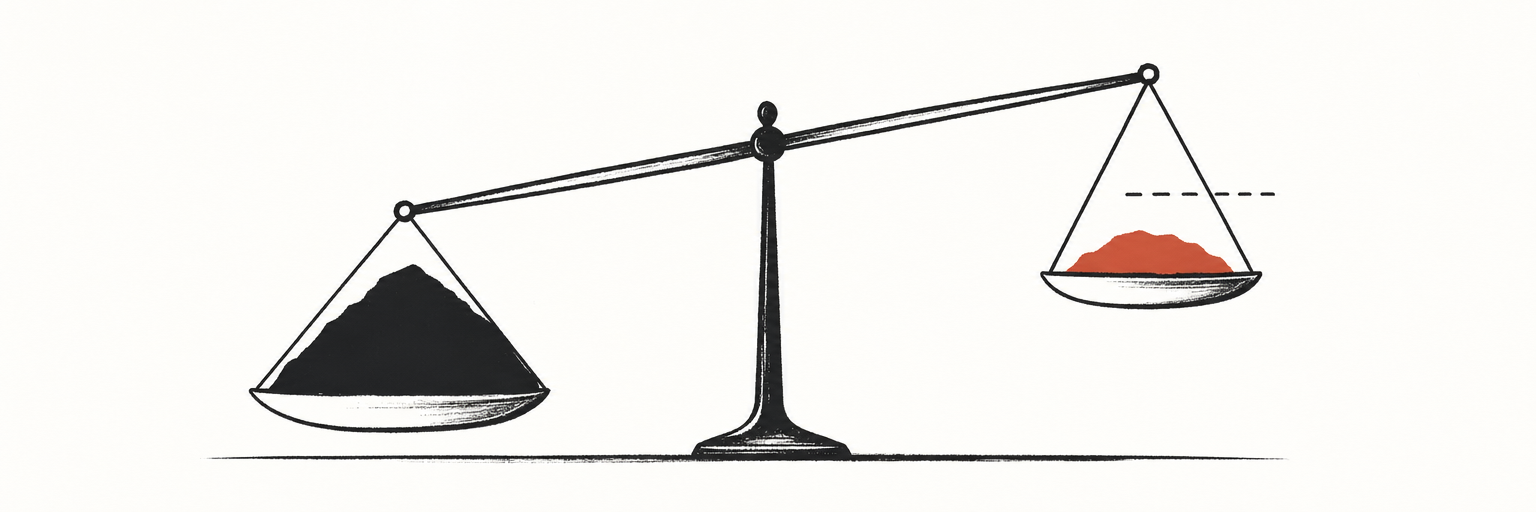
Debt settlement means paying a creditor or debt collector less than the full balance to resolve the debt. The creditor accepts the reduced payment as satisfying the obligation and stops pursuing collection.
In practice, settlements typically land between 40% and 60% of the original balance — meaning a $10,000 debt might settle for $4,000–$6,000. That sounds like a good deal, but the consequences are significant enough that settlement should usually be a last resort before bankruptcy, not a first move.
How debt settlement works
Settlements happen in two ways:
DIY — negotiating directly: You contact the creditor or collector yourself, explain your financial situation, and offer a lump sum. This is the lower-risk approach. Creditors prefer receiving something over pursuing a debt they may never fully collect. Third-party collectors often purchased the debt for pennies on the dollar, so even a 50-cent settlement can be profitable for them.
Through a for-profit debt settlement company: A company instructs you to stop paying your debts and instead deposit money into a dedicated escrow account. Once enough accumulates — typically over 2 to 4 years — they negotiate on your behalf. This approach introduces compounding risks.
Why for-profit settlement companies carry serious risk
The CFPB identifies several significant problems with for-profit settlement services:
- They charge fees of 15–25% of enrolled debt, often collected before your debts are fully settled
- Instructing you to stop paying creditors triggers late fees, penalty rates, and aggressive collection activity
- Creditors have no obligation to negotiate — some never will, leaving you with lawsuits after years of non-payment
- While funds accumulate, your balances grow through interest and penalty rates
- Creditors may sue before any settlement is reached, resulting in wage garnishment
- Some debts go unsettled even after years in the program
The FTC prohibits for-profit settlement companies from collecting fees before settling at least one debt, but this protection doesn’t prevent the other harms. The CFPB warns that settlement programs may leave you deeper in debt than when you started.
What settlements actually cost you
Typical settlement amounts by account status:
| Account status | Realistic settlement range |
|---|---|
| Early collections (60–90 days past due) | 70–90% of balance |
| Third-party collections (6–12 months past due) | 40–60% of balance |
| Very old debt (2–3 years in collections) | 20–50% of balance |
| Near statute of limitations expiry | Sometimes 15–30% |
These are ranges, not guarantees. Collectors are under no obligation to negotiate.
Credit score damage
Settlement causes substantial credit damage. A settled account is reported as “settled for less than full amount” — not “paid in full” — which signals to future lenders that you didn’t repay the full debt. This negative mark remains on your credit report for seven years from the date of first delinquency.
The score impact varies by starting point:
- Borrowers with scores above 700 typically see a drop of 140–160 points following settlement
- Borrowers with scores below 700 see drops of 45–65 points on average
- The first two years post-settlement carry the heaviest lender penalty; the impact diminishes meaningfully after three to four years
- Most borrowers with consistent on-time payments on remaining accounts see meaningful recovery within 12–24 months, even before the seven-year mark
Tax consequences of forgiven debt
This is the consequence most people miss. The IRS treats forgiven debt as taxable income. Under IRS Topic No. 431, if a creditor cancels $600 or more of debt, they must issue a Form 1099-C (Cancellation of Debt) by January 31 of the following year.
Example: You settle a $10,000 debt for $4,000. The $6,000 difference is reported as income on Form 1099-C. If you’re in the 22% tax bracket, you may owe $1,320 in additional federal taxes — on money you never actually received.
The insolvency exclusion: If your total liabilities exceed your total assets at the time of settlement, you may qualify to exclude some or all forgiven debt from income. You must document this using IRS Form 982. Consult a tax professional before settling any large debt.
Important 2026 change: The temporary exclusion for student loan forgiveness (in effect 2021–2025 under the American Rescue Plan) expired December 31, 2025. Federal student loan forgiveness in 2026 may now be taxable.
Comparing settlement against alternatives
| Option | Credit impact | Balance reduced? | Tax impact | Timeline |
|---|---|---|---|---|
| DIY debt settlement | Significant (140–160 pt drop from good credit) | Yes — 40–60% possible | Yes — 1099-C issued on forgiven amount | Months to 1 year |
| For-profit settlement program | Same plus years of missed payments | Yes — if it works | Yes | 2–4 years |
| Nonprofit debt management plan | Minimal | No — reduced rates, not balance | None | 3–5 years |
| Chapter 7 bankruptcy | Severe short-term, clean break | Full discharge possible | No tax on discharged debt | 3–6 months |
| Pay in full | None (or improves it) | No reduction | None | As quickly as possible |
Before settling, consider
Nonprofit credit counseling first. A debt management plan from a nonprofit credit counselor (look for NFCC- or FCAA-accredited agencies) doesn’t reduce your balance but lowers interest rates to 6–9% and consolidates payments without the risks of settlement or bankruptcy.
Bankruptcy as the cleaner alternative. For severe debt loads — especially if you’re already defaulting and facing lawsuits — Chapter 7 bankruptcy may offer faster resolution with a cleaner credit trajectory than a 4-year settlement program. The credit damage is severe but finite, and forgiven debt in bankruptcy is not taxable.
Common mistakes
Paying a for-profit company before they settle anything. Pre-2010 rules allowed upfront fees; current FTC rules prohibit charging fees before settling at least one debt, but some companies push the boundaries of this requirement.
Not getting the settlement agreement in writing. Always obtain a written agreement confirming the exact amount, that payment satisfies the debt in full, and that no remaining balance will be sold to another collector. Get this before sending any money. Some consumers have been re-contacted by new collectors on debts they thought were settled.
Settling without accounting for the tax bill. Plan for the 1099-C before you settle. If you can’t pay the taxes on forgiven debt, settlement may leave you trading a debt problem for a tax problem.
Settling time-barred debts carelessly. If a debt is past your state’s statute of limitations, making any payment can restart the collection clock. Know the SOL before negotiating.
Next action
If you’re considering settlement, start by contacting a nonprofit credit counselor (free or low-cost) to review all options. If you’re determined to settle directly, verify the debt first in writing, have a lump-sum offer ready before you call, negotiate starting 20–30% below your target, and get the written agreement before any payment clears.