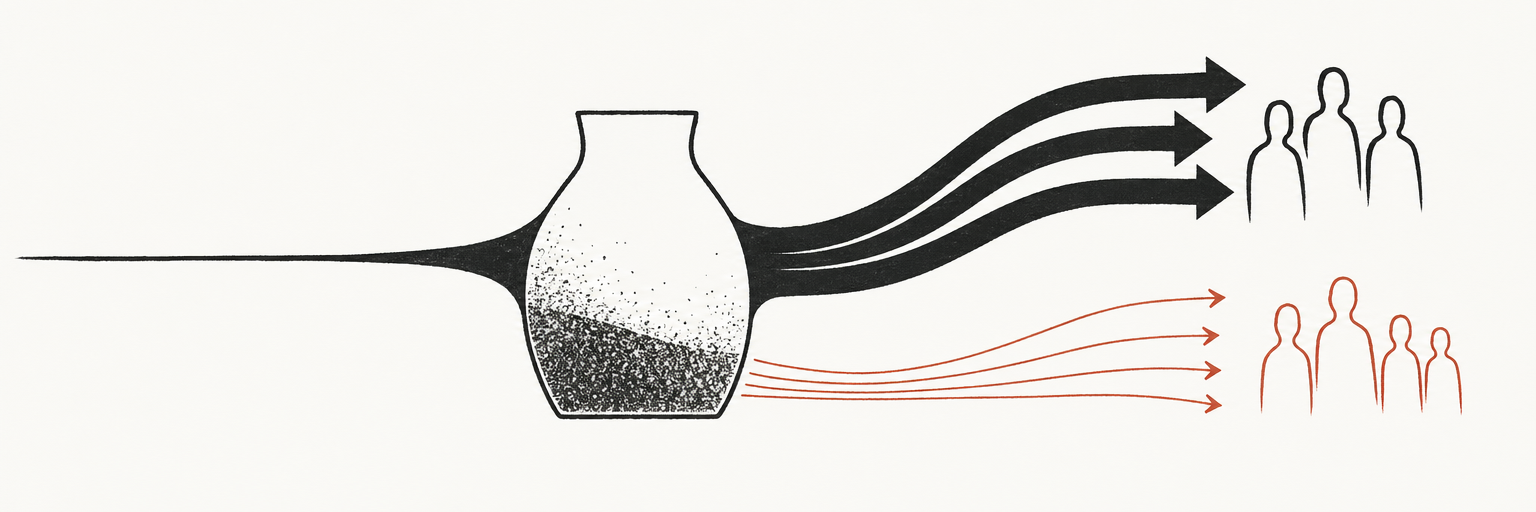
When someone dies, their debts don’t disappear. The debts become claims against the estate — the sum of everything the deceased person owned. The estate’s executor is responsible for notifying creditors and paying valid debts from estate assets before distributing anything to heirs.
If there’s not enough money in the estate to pay all debts, creditors generally absorb the loss. Family members are not required to pay a deceased relative’s debts from their own money unless they have a specific legal obligation to do so.
Who is legally responsible
The estate is responsible. Individual debts of the deceased go through the estate first. Creditors make claims, the executor reviews them, and debts are paid from estate assets in a priority order set by state law.
Co-signers are responsible. If you co-signed a loan with someone who has died, you are fully responsible for that debt. Co-signing is a legal commitment to pay regardless of what happens to the other borrower.
Joint account holders are responsible. A joint credit card means both cardholders are responsible for the full balance — not just their share of the charges. The surviving account holder owes the full balance.
Authorized users are not responsible. Being listed as an authorized user on someone else’s credit card does not make you legally responsible for the balance.
Spouses in community property states may be responsible. The nine community property states — Arizona, California, Idaho, Louisiana, Nevada, New Mexico, Texas, Washington, and Wisconsin — generally treat debts incurred during a marriage as shared obligations, even if only one spouse’s name was on the account. This varies by state; an attorney familiar with your state’s law can clarify.
Summary of liability by relationship
| Relationship to deceased | Generally responsible? |
|---|---|
| Estate | Yes — debts paid before inheritance |
| Co-signer | Yes — fully responsible |
| Joint account holder | Yes — fully responsible |
| Spouse (community property state) | Depends on state law and when debt was incurred |
| Spouse (non-community property state) | Generally no, unless joint account or co-signer |
| Authorized user | No |
| Child, parent, sibling | No — unless co-signer or joint account holder |
What creditors can and cannot do
Debt collectors are allowed to contact the estate’s executor about the deceased person’s debts. The FTC notes they may also contact a surviving spouse or the person’s parents (if the deceased was a minor) — but only to locate the executor or determine estate information.
Debt collectors cannot tell family members they are responsible for a debt when they are not. Claiming that a family member legally owes a debt they’re not obligated to pay is a violation of the Fair Debt Collection Practices Act (FDCPA). If a collector is pressuring you to pay a debt you’re not legally responsible for, you can:
- Request written verification of the debt and your alleged obligation
- File a complaint with the CFPB (cfpb.gov) or the FTC (reportfraud.ftc.gov)
Assets that pass outside the estate
Under most state laws, certain assets bypass probate entirely and pass directly to named beneficiaries — which also means individual creditors of the estate generally cannot reach them:
- Life insurance proceeds (paid to a named beneficiary)
- Retirement accounts with designated beneficiaries (401(k), IRA)
- Joint tenancy property (passes directly to the surviving joint owner)
- Assets in a properly structured trust
State law governs the specifics, and rules vary. This is part of why estate planning matters: structuring assets with named beneficiaries can keep them out of the probate estate and insulated from the deceased’s individual debts.
Student loans: a special case
Federal student loans are discharged (canceled) at the borrower’s death. The family needs to provide proof of death to the loan servicer. Private student loans vary by lender — some are discharged at death; others remain a claim against the estate or, if co-signed, fall to the co-signer. Check the loan terms or contact the servicer directly.