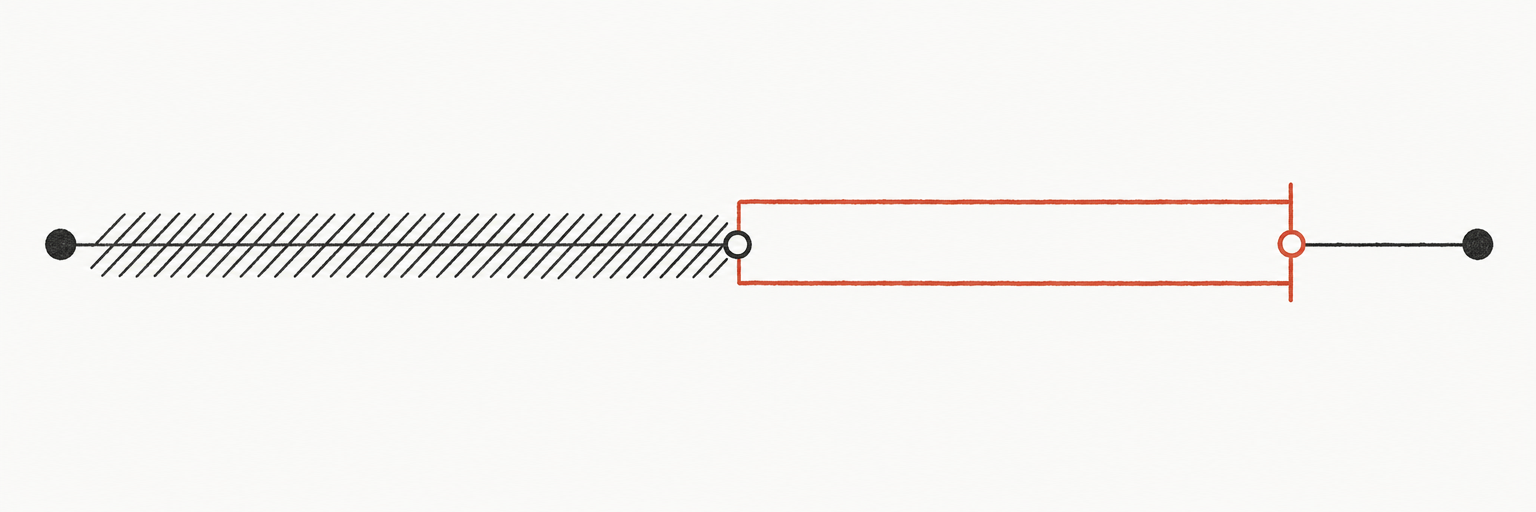
A grace period is the time between when your credit card statement closes and when your payment is due. During this window, you can pay your full statement balance without being charged any interest on purchases. Use the card, pay the full balance on time, and interest never enters the picture.
The CFPB defines a grace period as “a period within which any credit extended may be repaid without incurring a finance charge due to a periodic interest rate.” Federal law — specifically Regulation Z (12 CFR 1026.54), which implements the CARD Act — requires credit card issuers to give cardholders at least 21 days from the statement mailing date before the payment is due.
How the billing cycle works
Each month, your card goes through a billing cycle — typically 28 to 31 days. When the cycle ends, the issuer calculates your statement balance and sends you a bill. The grace period begins at that statement closing date and runs until your payment due date.
| Phase | What happens |
|---|---|
| Billing cycle (28–31 days) | Purchases accumulate, interest accrues only if you’re already carrying a balance |
| Statement closing date | Issuer calculates your balance and generates a statement |
| Grace period (21–25 days) | No new interest on purchases if you pay the full balance |
| Payment due date | Pay the full statement balance by this date to avoid interest |
The full-balance requirement
The grace period applies only when you pay your full statement balance. Pay anything less and two things happen:
- You’re charged interest on the unpaid balance for that billing cycle
- The grace period disappears for the next cycle — new purchases start accruing interest immediately, from the date of the transaction
This is why carrying even a small balance can be expensive. Once the grace period is gone, you’re paying interest on every purchase you make, not just the unpaid balance from last month.
Cash advances and balance transfers: no grace period
The CFPB notes that cash advances typically begin accruing interest on the date of the transaction — there is no grace period. The same applies to most balance transfers. If you take a $500 cash advance and pay your entire bill two weeks later, you’ll still owe interest on those two weeks.
Check your card’s terms for how it treats these transaction types — they vary by issuer.
How to use the grace period strategically
If you pay your balance in full every month, your credit card functions as an interest-free loan for the length of the billing cycle plus the grace period — often 45 to 55 days from the time of purchase to the payment due date.
This is effectively free float: you make a purchase on day 1 of the billing cycle, the statement closes 30 days later, and you have another 21–25 days to pay. Buy something on the first day of a new cycle and you have roughly 50–55 days before any money leaves your account.
This only works if you pay the full balance every month. The moment you don’t, the interest cost makes any benefit disappear quickly.
If you’re already carrying a balance
If you have an existing balance and want to restore the grace period:
- Pay the full statement balance (including the carry-over balance) in one billing cycle
- Some issuers require two consecutive full payments before reinstating the grace period — check your card agreement
Until the grace period is fully restored, even new purchases are accruing interest from the date of purchase.
Checking your grace period
Every credit card agreement must disclose the grace period length. Find it on your card’s terms and conditions or monthly statement. Most run 21–25 days according to NerdWallet’s survey of major issuers, though some cards offer longer windows as a feature. Cards marketed to people rebuilding credit sometimes have no grace period at all — another reason to read the fine print before applying.